



What Is IP69K? Meaning and How It Differs from IP68 Ratings

1.What Is IP69K? The True Meaning of IP69K and How It Differs From IP68
Why High Waterproof Ratings Matter in Harsh Environments
In the automotive, commercial vehicle, construction machinery, and agricultural equipment markets across the U.S. and Europe, lighting systems must withstand exceptionally harsh operating conditions:
- Thick mud and dirt
- Frequent high-pressure washing
- Rain, snow, and humidity
- High temperatures, oil exposure, and dust
- Salt spray and long-term outdoor wear
Without proper protection, LED work lights can fail due to moisture intrusion, corrosion, or seal damage caused by high-pressure jets. This is why understanding the IP69K meaning and IP68 specifications is considered essential in many Western markets.
Among these, IP69K is one of the highest and most demanding ratings, designed to withstand high-pressure, high-temperature water jets at 80°C. This makes it ideal for:
- Commercial trucks and utility vehicles
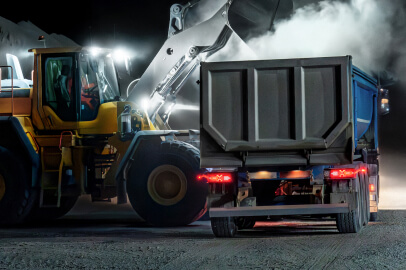
- Construction machinery
- Agricultural tractors and harvesters
- Outdoor forklifts
- Mining and heavy industrial equipment
2.Understanding IP Ratings — What Do the Numbers Mean?
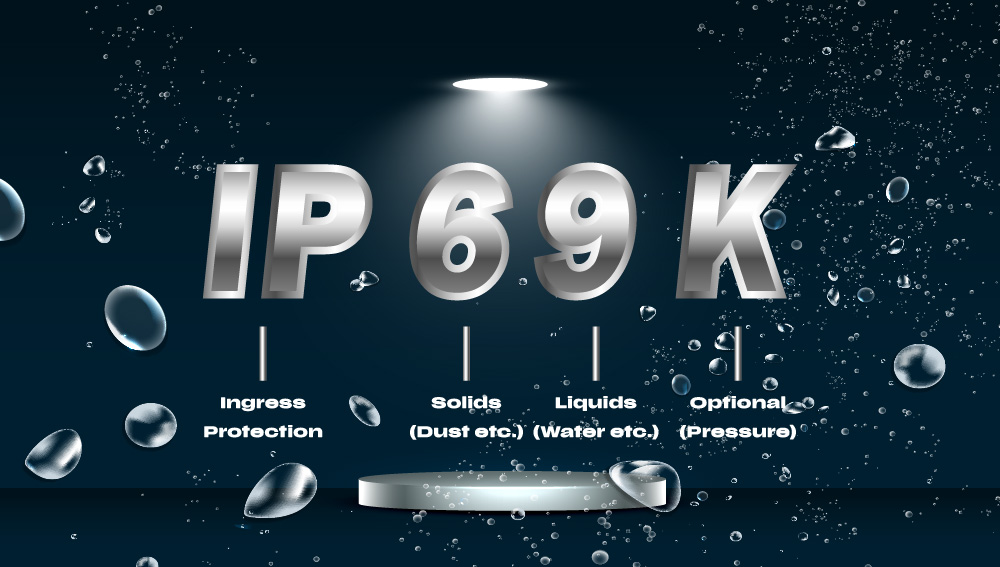
IP ratings (Ingress Protection) are defined by global IEC standards to measure a product’s resistance to dust and water intrusion. The IP code consists of two digits, each representing a different protection level.
First Digit (0–6) — Dust Protection
- 6 = Completely dust-tight
The highest level of dust protection, ensuring no particulate intrusion.
Second Digit (0–9K) — Water Protection
- 7 = Submersion at 1 m for 30 minutes
- 8 = Long-term submersion beyond 1 m (conditions defined by the manufacturer)
- 9K = High-pressure, high-temperature water jets
In simple terms:
- IP68 meaning translates to: Dust-tight + long-term underwater protection
- IP69Kmeaning translates to: Dust-tight + withstands extreme high-pressure, high-temperature cleaning
Both ratings are crucial for high-reliability vehicle and industrial lighting systems.
3.What Is IP69K? The True Meaning of IP69K
Beyond the technical definition, the practical IP69K meaning for a work light is its ability to withstand:
- Daily high-pressure automotive or industrial washing
- Heavy mud and dirt buildup
- High-temperature cleaning
- Oil contamination
- Severe dust and vibration
- Construction and mining environments
For this reason, IP69K has become a key durability benchmark for professional-grade lighting in North America and Europe.
4.IP69K vs IP68 — Differences and When to Choose Each Rating
Both IP ratings offer strong protection, but they are designed for different hazards.
| Feature | IP68 | IP69K |
| Dust Protection | Fully dust-tight | Fully dust-tight |
| Water Protection | Long-term submersion | High-pressure 80°C jets |
| Best Use | Underwater or deep immersion | Heavy mud & high-pressure washing |
| Typical Environments | Marine, off-road water crossing | Construction, agriculture, mining |
When to Choose IP68
Perfect for environments involving prolonged water exposure, such as:
- Off-road vehicles driving through deep water
- Marine and coastal operations
- Equipment requiring underwater durability
When to Choose IP69K
Recommended for equipment exposed to extreme cleaning, mud, or industrial conditions:
- Construction and earthmoving machinery
- Mining equipment
- Agricultural tractors and combines
- Outdoor forklifts
- Trucks and utility fleets
- Equipment that undergoes frequent power washing
If your equipment is washed daily or exposed to heavy mud, IP69K is nearly essential.
5.Industry Applications — Including the SCI C2-3010 Series Work Lights
Different industries in Europe and the U.S. face unique environmental challenges. Below are common application scenarios where IP69K protection is beneficial.
Agricultural Machinery Lighting
Tractors, sprayers, and harvesters face:
- Persistent mud
- Heavy dust
- Rain and field washdowns
- Routine high-pressure cleaning
Recommended rating: IP68 or IP69K
Examples:
- C2-3010 Series heavy-equipment LED work lights
- C2-388 Series untral oval LED work light
- C2-3027 Series 84mm round LED work light
Forklift Lighting
Outdoor and port forklifts face:
- Moisture and oil exposure
- Dust and vibration
- Constant cleaning
For these conditions, IP69K is strongly recommended.
Examples:
- C2-3003 9–64V LED work light
- C2-7815 9-64 85mm mining red warning light
- C2-3025 9-64V warehouse LED flood light
Construction & Mining Machinery Lighting
Excavators, pavers, and mining vehicles face:
- Heavy gravel and dust
- Mud spray
- Extreme washing
- High shock loads
Examples:
- C2-3010 Series heavy-equipment LED work lights
- C2-392 heavy-duty work lights
In these industries, IP69K is essentially the standard requirement.
SCI C2-3010 Series — Heavy-Duty Work Light Example
The SCI C2-3010 Series is engineered for demanding European and U.S. markets. Key features include:
- IP68/IP69K dual protection for complete dust and water resistance
- Shock-resistant housing for construction and agricultural machinery
- Stable, uniform LED illumination for night operations
- Strong resistance to mud, pressure washing, and outdoor environments
The C2-3010 Series is a reliable lighting solution frequently used on excavators, loaders, tractors, and mining equipment.
6. FAQ about IP69K : True Meaning of IP69K & Product Insights
Q1: Does IP69K mean fully waterproof?
Not entirely.
IP69K protects against high-pressure, high-temperature jets, but not long-term submersion. Underwater use still requires IP68.
Q2: Is IP69K better than IP68?
Neither is “better”; they serve different purposes:
- IP68 = best for submersion
- IP69K = best for high-pressure and hot-water cleaning
Q3: Are there products rated both IP68 and IP69K?
Yes. Many high-end work lights—including SCI’s professional series—offer dual protection.
Q4: Is IP69K commonly required in the U.S. and Europe?
It is not mandatory, but it is widely used in:
- Construction
- Mining
- Agriculture
- Material handling
- Heavy-duty truck fleets
Q5: Do LED work lights benefit from IP69K?
Absolutely.
High-pressure washing can easily cause water intrusion, so IP69K helps extend the life and reliability of LED lighting.
Through this article, we believe you now understand the IP69K meaning.IP69K is one of today’s highest and most demanding protection levels, designed for equipment that must endure mud, dust, vibration, and intense high-pressure cleaning. For professionals working with construction machinery, agricultural vehicles, forklifts, mining equipment, or heavy-duty trucks across Europe and the U.S., choosing the correct IP rating—IP68, IP69K, or both—can significantly reduce maintenance costs and extend equipment lifespan.
If you need LED work lights built for extreme environments, SCI’s work-light series—including the C2-3010 Series—offers:
- Industry-leading waterproof and dustproof protection
- Durable, long-lasting LED output
- Reliable performance in construction, mining, agricultural, and industrial applications
👉 Contact SCI today to find the ideal lighting solution for your equipment.
Improve safety. Boost productivity. Keep your operations running—no matter the environment.
Further Reading:
IP67 vs IP68: Waterproof Rating Comparison and Selection
Ingress Protection Testing: Common IP Levels & Their Meanings