











What Is a PD Charger? Benefits, Uses, and Compatibility Details for Car Use

What Is a PD Charger? Overview of Car PD Chargers, Applications & Compatibility
With the growing popularity of smartphones, tablets, and in-car devices, charging inside vehicles has become an essential part of driving. A car PD charger (Power Delivery charger) is an in-vehicle charging solution that supports USB-C PD fast charging. It dynamically adjusts power output according to device requirements, providing a faster and safer charging experience.
For example, during long road trips, delivery routes, or family travel, a car PD charger can charge multiple devices simultaneously, improving in-car convenience and efficiency.
1.What Is a Car PD Charger?
PD Charger, short for USB Power Delivery, is a fast charging protocol based on the USB-C interface.
Unlike traditional USB chargers, PD charging technology offers the following features:
- Dynamic power adjustment: Automatically switches output voltage and current according to the needs of the connected device (smartphone, tablet, or even laptop).
- High power delivery: Breaks the 5W limit of traditional USB, offering higher wattage output.
- Bidirectional power flow: USB-C allows power to flow both ways, providing flexibility.
2.How Car PD Chargers Work
Car PD chargers use USB Power Delivery technology to automatically adjust voltage and current based on connected devices (e.g., 9V, 12V, 15V, or higher outputs), preventing overcharging or wasted power.
Simply install the charger into a 12V/24V cigarette lighter socket or panel-mount location, and it will provide efficient and stable power to USB-C devices, suitable for most passenger and commercial vehicles.
3.Why Choose a Car PD Charger?
Compared to traditional USB car chargers, car PD chargers offer clear advantages:
Fast charging efficiency:
- Traditional chargers provide only 2.5W–5W, while PD fast charging can reach 27W, 45W, or more, drastically reducing charging time and improvingi user convenience.
High compatibility:
- Supports multiple USB-C devices such as smartphones, tablets, and laptops.
Safety protection:
- Built-in overcurrent, overvoltage, and temperature control prevents device damage.
Designed for automotive use:
- OE-style panel designs integrate seamlessly with vehicle interiors, avoiding the bulkiness of external chargers, and are suitable for vibration, high temperature, and long-term use.
4.Recommended Products: Choosing the Right Car PD Charger
Depending on your use case, we recommend the following high-performance solutions:
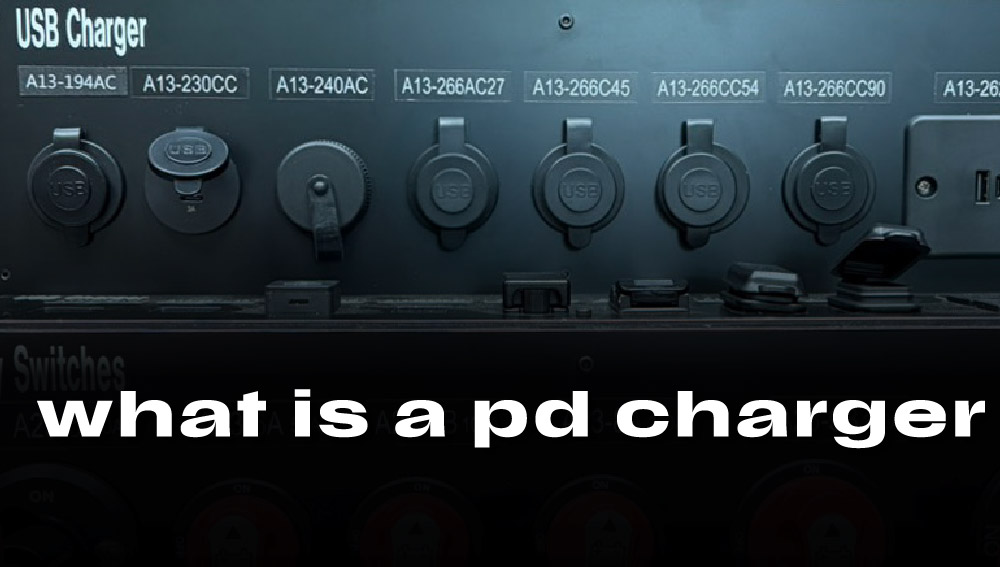
A. Best for Commercial Vehicles: A13-266AC27
Equipped with a splash-proof protective cover design, and provides a single USB-C PD 27W output, compatible with all smartphones and tablets for fast charging, while also retaining the USB-A port, allowing devices that use USB-A for charging/power supply to be used.
- Key features: Single PD 27W + 2.4A with dustproof cover design.
- Applicable: Suitable for public transportation buses.
B. First Choice for Daily Commuting and Family Vehicles: A13-266CC54
Adopts an OE-style panel design, perfectly blending with the vehicle interior. Dual USB-C PD 27W outputs, suitable for fast charging two mobile devices simultaneously.
- Key features: Dual USB-C ports, single port supports PD 27W (total 54W).
- Advantages: Meets OE original aesthetics, perfectly integrated into the dashboard panel.
- Applicable: Standard passenger cars and SUVs, capable of fast charging two phones simultaneously.
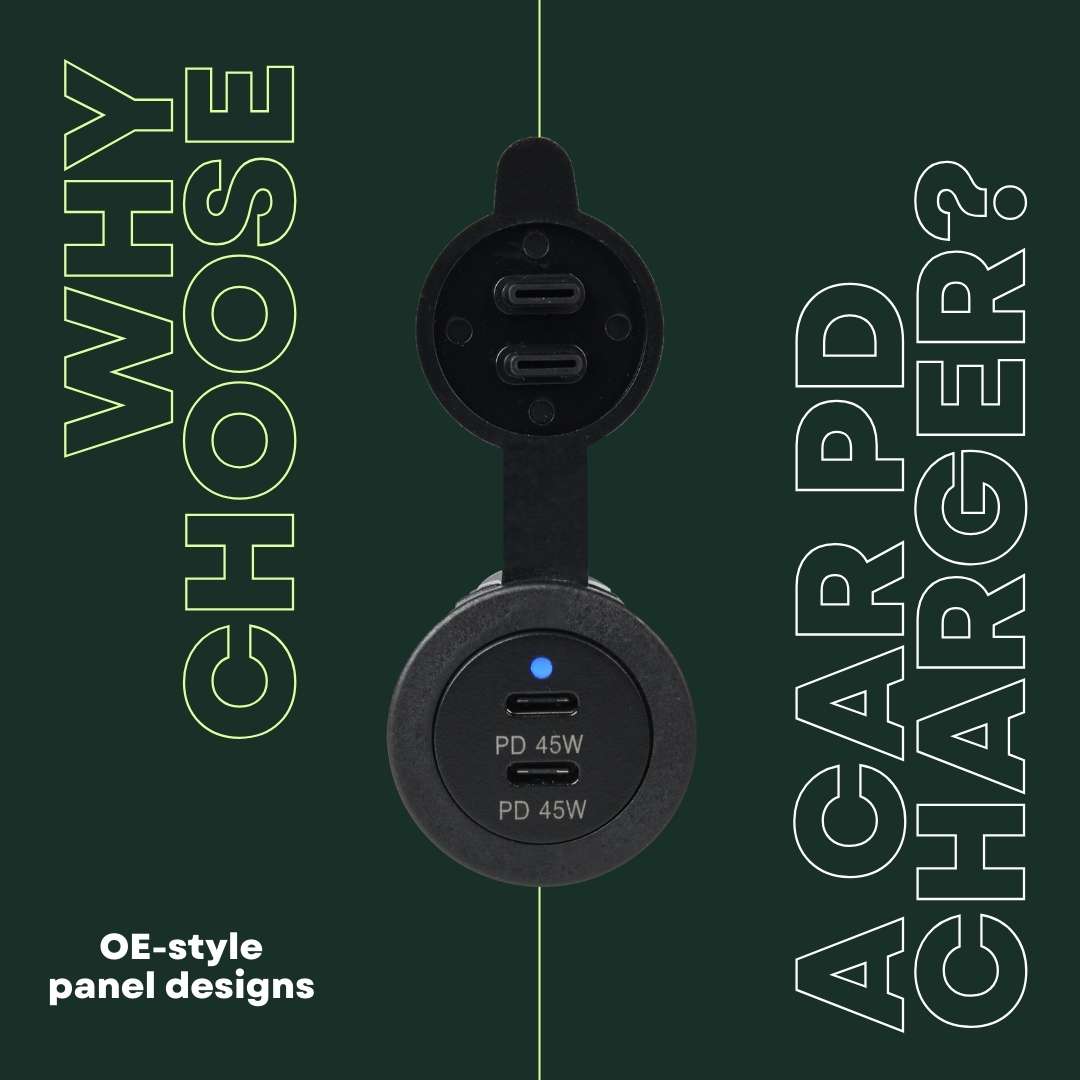
C. First Choice for Business Users in Commercial Vehicles: A13-266CC90
Equipped with a dustproof protective cover design, and provides dual USB-C PD 45W outputs, suitable for users who need to charge tablets and business laptops, allowing them to charge not only mobile devices but also notebook business computers while on the vehicle.
- Key features: Dual PD 45W + 45W with dustproof cover design.
D. Practical Application Scenarios of In-Vehicle PD Chargers
📌 Use Case: A13-266CC90
- Long-Distance Driving: Using mobile phone navigation consumes a lot of power; PD fast charging can improve charging efficiency.
- Business Vehicles: Commercial buses equipped with a 45W charger can ensure each passenger can quickly charge mobile devices, and also provide power for business laptops, providing convenience for business professionals who need to use laptops while traveling.
The A13-266CC90, with excellent protective design and reliability tested according to automotive standards, provides users with a stable and fast charging experience while in the vehicle.
5.Frequently Asked Questions (FAQ)
Q1: Are car PD chargers compatible with all vehicles and transport modes?
A: Yes. As long as the vehicle has a 12V or 24V power system (e.g., most passenger cars, trucks, RVs, yachts), the corresponding PD charging module can be installed. Choose the appropriate installation type and power rating according to your vehicle.
Q2: Can PD charging damage my phone or battery?
A: No. PD technology features communication negotiation, ensuring the charger confirms the maximum power the device can safely handle. The device will only draw power within its safe limit, protecting the battery.
Q3: Why must car chargers meet UL fire safety standards?
A: The in-vehicle environment often experiences high temperatures and direct sunlight. UL-rated materials ensure self-extinguishing properties in extreme conditions, preventing melting or fire, which is critical for driving safety.
Car PD chargers operate in high temperature, enclosed, and continuous power environments. Materials that are not heat-resistant could deform, melt, or ignite. Using UL fire-rated materials (e.g., UL94 V-0) significantly reduces burn and fire risks, ensuring self-extinguishing properties and overall electrical safety.
For automotive electronics, UL-rated materials are not only a basic safety requirement but also a key consideration for OEMs, car manufacturers, and overseas regulations, enhancing product reliability under long-term high-temperature conditions.
Further Reading:
What Is UL Certification? Essential for Global Market Compliance