






How to Choose a Reliable Automotive Lighting Manufacturer in 2026: 6 Key Buyer Criteria

In the global automotive aftermarket (AM) and OEM supply chains, sourcing automotive LED lighting goes far beyond price comparisons. It requires a comprehensive evaluation of product quality, regulatory compliance, R&D capabilities, and supply chain stability.
As vehicle electrification, automotive electronics, and smart lighting technologies continue to advance, international buyers must assess a manufacturer’s total operational capability to mitigate long-term partnership risks.
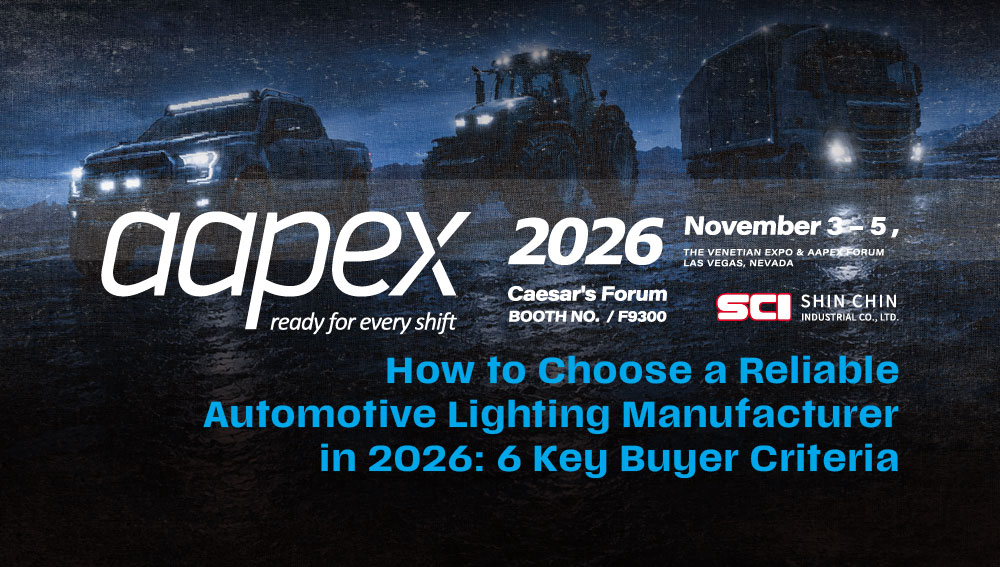
If you are planning your sourcing trip for AAPEX 2026, it offers an ideal opportunity to meet automotive lighting manufacturers face-to-face, compare product lines, and evaluate OEM/ODM capabilities in person. SCI will showcase our latest automotive lighting and auto electrical products at AAPEX 2026, and we cordially invite global buyers to visit our booth for business discussions.
Exhibition Information
- Exhibition: AAPEX 2026
- Venue: Caesars Forum, 3911 Koval Ln, Las Vegas, NV 89109, USA
- Booth No.: F9300
- Date: Nov. 3–5, 2026
If you are unable to attend AAPEX 2026 in person, you can still evaluate potential suppliers remotely by reviewing their R&D strength, quality management systems, regulatory compliance, testing capabilities, and OEM/ODM track record before scheduling virtual meetings or requesting product documentation.
1.Quality Management System: IATF 16949 is a Vital Benchmark
When evaluating an automotive lighting manufacturer, first verify their quality management infrastructure and industry experience.
- IATF 16949: The flagship quality management standard tailored specifically for the automotive supply chain. It governs risk management, process control, continuous improvement, and sub-supplier auditing.
- ISO 9001: The foundational quality management framework serving as a baseline for manufacturing process control.
For manufacturers supplying OEM or aftermarket automotive parts, IATF 16949 is a crucial indicator for global buyers. However, holding an IATF 16949 certificate alone does not automatically guarantee flawless product quality. Buyers should further investigate actual shop-floor process controls, quality data metrics, customer complaint resolution procedures, and component traceability systems.
2.Regulatory Compliance & Market Authorization: Meeting Regional Standards
Because automotive lights are safety-critical components, different target markets impose distinct mandates regarding photometric performance, electrical safety, electromagnetic compatibility (EMC), and product markings.
North American Market
- Automotive lighting in the United States must comply with FMVSS No. 108 (Federal Motor Vehicle Safety Standards) and relevant SAE technical requirements.
- Crucial Distinction: The U.S. DOT (Department of Transportation) does not issue individual product approvals or certificates. Instead, the U.S. enforces a self-certification system where manufacturers or importers certify that their products conform to applicable FMVSS standards and apply proper markings accordingly.
- Canada enforces corresponding CMVSS 108 requirements. A supplier’s familiarity with North American regulatory frameworks and testing protocols is a key evaluation criterion for buyers.
European Market
Automotive lamps intended for Europe typically fall under UNECE Regulations, depending on the vehicle application and lamp function.
- UNECE R10: Covers electromagnetic compatibility (EMC) for vehicles and electronic sub-assemblies.
- E-Mark: Products complying with applicable UNECE type-approval requirements are authorized to display the designated E-Mark approval logo.
Rather than simply asking if a supplier has “DOT or E-Mark,” buyers should verify whether specific product lines meet the precise requirements of their target markets and request official laboratory test reports. A manufacturer that collaborates with certified third-party testing labs streamlines the audit process for international buyers.
3.R&D, Optical, and Thermal Engineering Capabilities: Ensuring Production Feasibility
Automotive LED lamps combine optics, electronics, thermal design, and mechanical engineering. Evaluating a vendor requires looking beyond catalog images into true engineering competence:
- Optical Design & Cut-Off Line Control: For headlights and auxiliary driving lights, verify that beam patterns, light distribution, and glare control conform to applicable regulations and end-use environments.
- Thermal Management: LED performance and operational lifespan deteriorate under excessive heat. Confirm whether the manufacturer possesses in-house expertise in heatsink design, PCB layout, thermal interface materials, and thermal simulation software.
- Electronics & EMC Design: Evaluate their circuit protection, power management, and EMC design capabilities tailored to automotive electrical environments.
- OEM/ODM Development: Can the manufacturer support the full lifecycle—from spec definition, 3D modeling, and tooling design to sample validation and mass production?
- Vehicle Compatibility: Confirm whether they perform electrical compatibility and functional validation for specific vehicle platforms.
A capable R&D team is defined not by its headcount, but by its ability to translate buyer requirements into validated, mass-producible products.
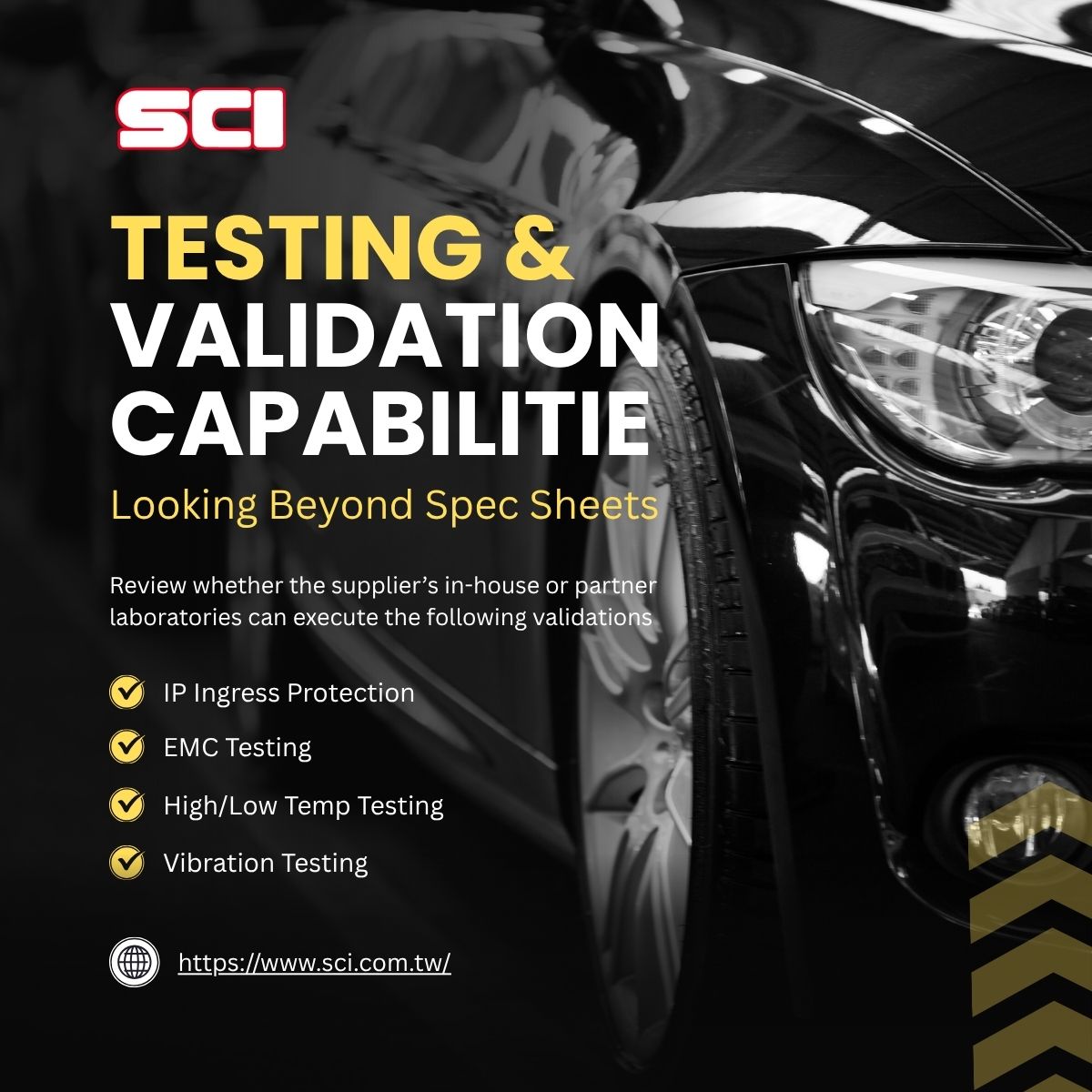
4.Testing & Validation Capabilities: Looking Beyond Spec Sheets
Product specification sheets detail intended design parameters, whereas rigorous testing proves actual real-world endurance.
Review whether the supplier’s in-house or partner laboratories can execute the following validations:
| Test Item | Primary Objective | Buyer Verification Focus |
| IP Ingress Protection | Evaluates resistance against solid particles and moisture. | Verify actual IP ratings and specific testing standards applied. |
| EMC Testing | Measures electromagnetic interference and immunity. | Confirm compliance with CISPR 25, UNECE R10, or OEM specs. |
| High/Low Temp Testing | Validates performance under extreme temperature conditions. | Review test temperature ranges and thermal soak duration. |
| Thermal Shock | Assesses component reliability during rapid thermal cycling. | Ensure test parameters reflect real-world operating environments. |
| Vibration Testing | Simulates mechanical stress during vehicle operation. | Confirm alignment with applicable automotive vibration profiles. |
| Salt Spray Corrosion | Measures corrosion resistance of metals and surface coatings. | Critical for exterior lighting exposed to harsh winter roads. |
Note: Ratings such as IP67, IP68, or IP69K are not mandatory for every automotive lamp; requirements depend on mounting location and application. Similarly, -30°C to +65°C should not be assumed as a universal standard. Professional buyers should request detailed test reports, test profiles, and standard references from the manufacturer.
5.OEM / ODM & Private Label Support: Expanding Customization Capabilities
For auto parts brands, importers, and regional distributors, a manufacturer’s flexible OEM/ODM capabilities determine product line scalability.
Verify if the manufacturer supports:
- Custom enclosure aesthetics and mechanical structures
- Tailored electrical specs and functional adjustments
- Custom logo marking and product labeling
- Customized retail packaging and Private Label programs
- Tooling design, prototyping, and New Product Development (NPD) workflows
A mature OEM/ODM partner does more than slap a logo on an existing shell; they guide the project through engineering development, validation testing, and stable series production while maintaining clear policies on MOQs, tooling costs, and lead times.
6.Supply Chain Management & Volume Production: Maintaining Long-Term Delivery
A competitive initial quotation does not guarantee long-term delivery performance. Robust supply chain resilience is essential for global buyers:
- Component Sourcing: Are key LEDs, ICs, connectors, and electronic components secured through stable, authorized supply channels?
- Risk Mitigation: Does the factory maintain approved secondary sources (dual-sourcing) for critical components
- Manufacturing Capacity: Does the facility possess adequate SMT, assembly, testing, and packaging automation?
- Traceability: Are raw materials, sub-assemblies, and finished goods tracked via batch traceability systems?
- On-Time Delivery (OTD): Does the vendor maintain clear production scheduling and a proven on-time delivery record?
- Multi-Location Manufacturing & Supply Capabilities: For large-scale buyers, does the supplier possess the flexibility to adapt to regional supply chain shifts?
Amid geopolitical shifts, tariff adjustments, and shipping disruptions, evaluating a manufacturer’s overall supply chain resilience provides far greater long-term value than focusing solely on unit price.
Conclusion: Evaluate Total Manufacturing Competence Over Price Alone
Price is only one element of a sourcing decision. For international buyers, sustainable value comes from evaluating the complete chain:
Quality Management → Compliance → R&D → Testing → OEM / ODM → Supply Resilience
These 6 capabilities will help buyers thoroughly evaluate whether an automotive lighting manufacturer is the right long-term partner for their business.
If you are sourcing automotive lighting suppliers for AAPEX 2026 or your next procurement cycle, we cordially invite you to visit the SCI team at Booth F9300 in Caesars Forum, Nov. 3–5, 2026. We look forward to discussing your product requirements, OEM/ODM development, and long-term supply partnerships.
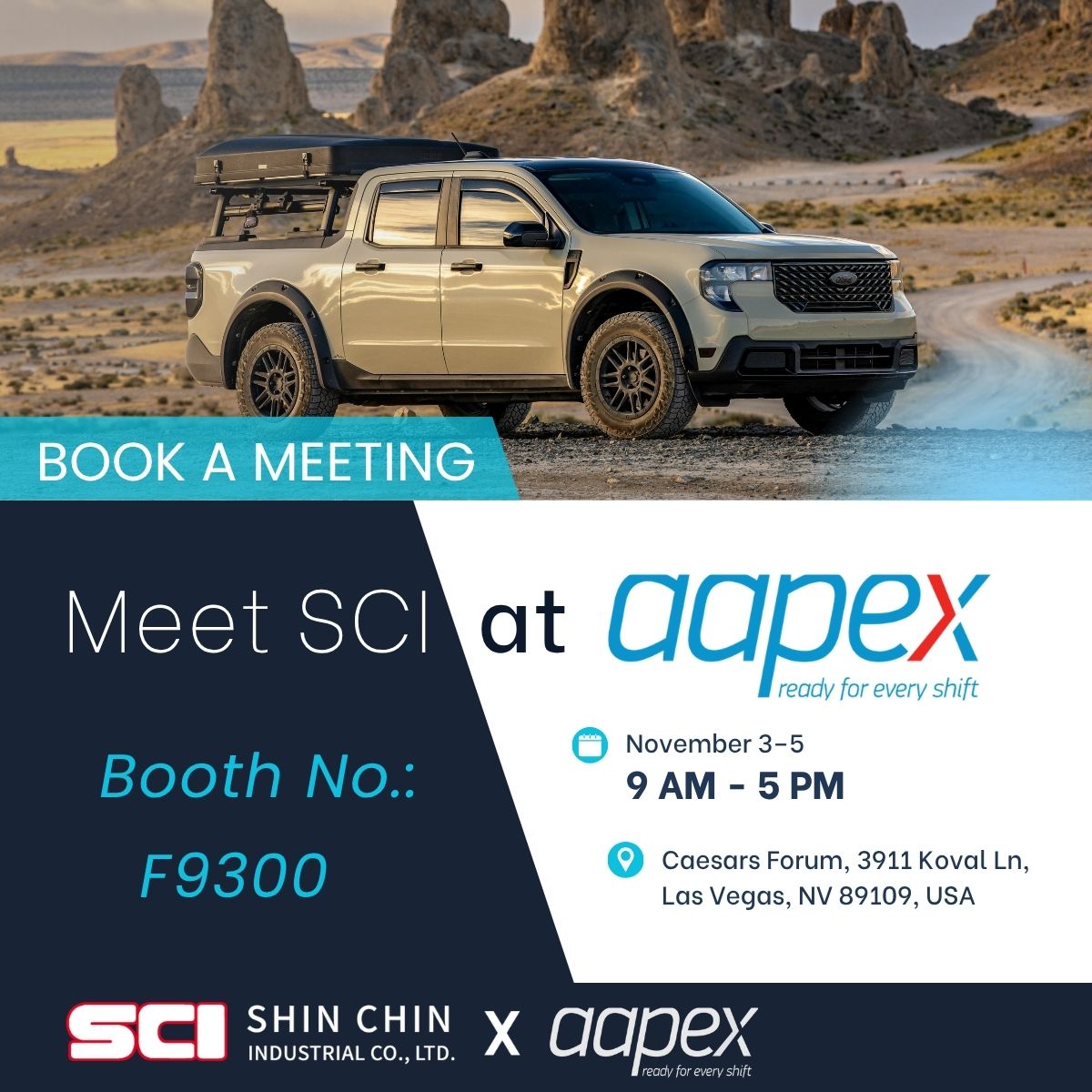
AAPEX 2026
Caesars Forum | Booth F9300
Nov. 3–5, 2026
3911 Koval Ln, Las Vegas, NV 89109, USA
If you are unable to attend the show in person, feel free to contact SCI directly to learn more about our automotive LED lights, work lights, marker & signal lamps, and customized OEM/ODM sourcing solutions.
Further Reading:
Aapex 2026: Explore SCI Online Exhibition Now
Exhibition!Metstrade 2026 Preview: SCI Launches Online Exhibition