







5 Types of Marine Lights at Night: A Safety & Compliance Guide

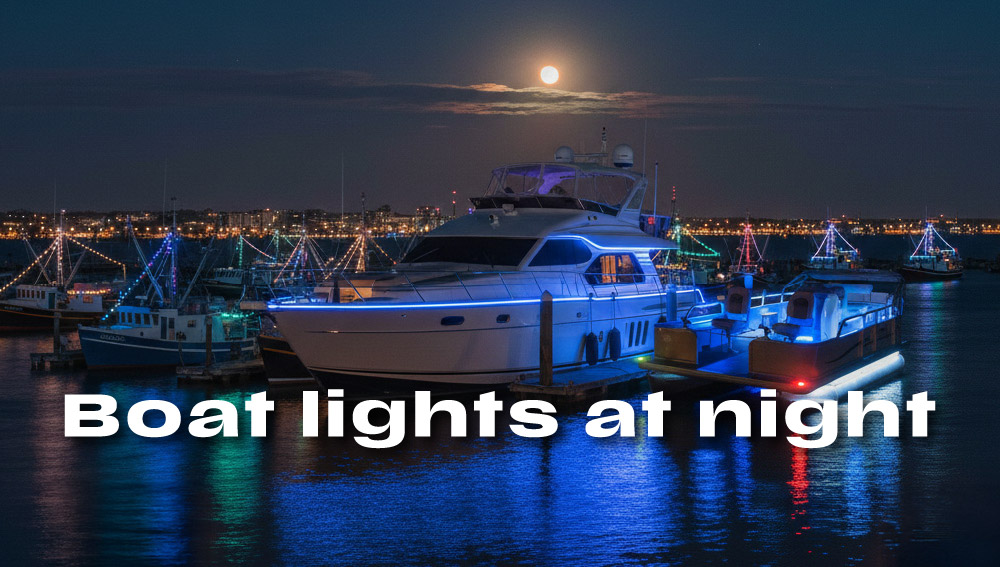
Boating at night comes with the critical importance of maritime safety signaling. According to USCG (U.S. Coast Guard) regulations and COLREGs (International Regulations for Preventing Collisions at Sea), operating a vessel between sunset and sunrise requires specific navigation-lighting configurations to ensure that other vessels can clearly identify your direction of travel.
However, compliance isn’t just about having lights with the proper, regulation-approved color output; it’s about having lights that carry the required certification and function correctly. In this guide, we will break down the 5 essential types of boat lights at night, common technical failures, and how to ensure your vessel remains safe and compliant.
5 Types of Boat Lights at Night
Visibility is not just about brightness; it’s about reliability. When navigating in the dark night, your lighting system serves as your means of maintaining situational awareness throughout the voyage. Here are the 5 key categories you must know:
Type 1-3: Navigation Lights (The Essentials)
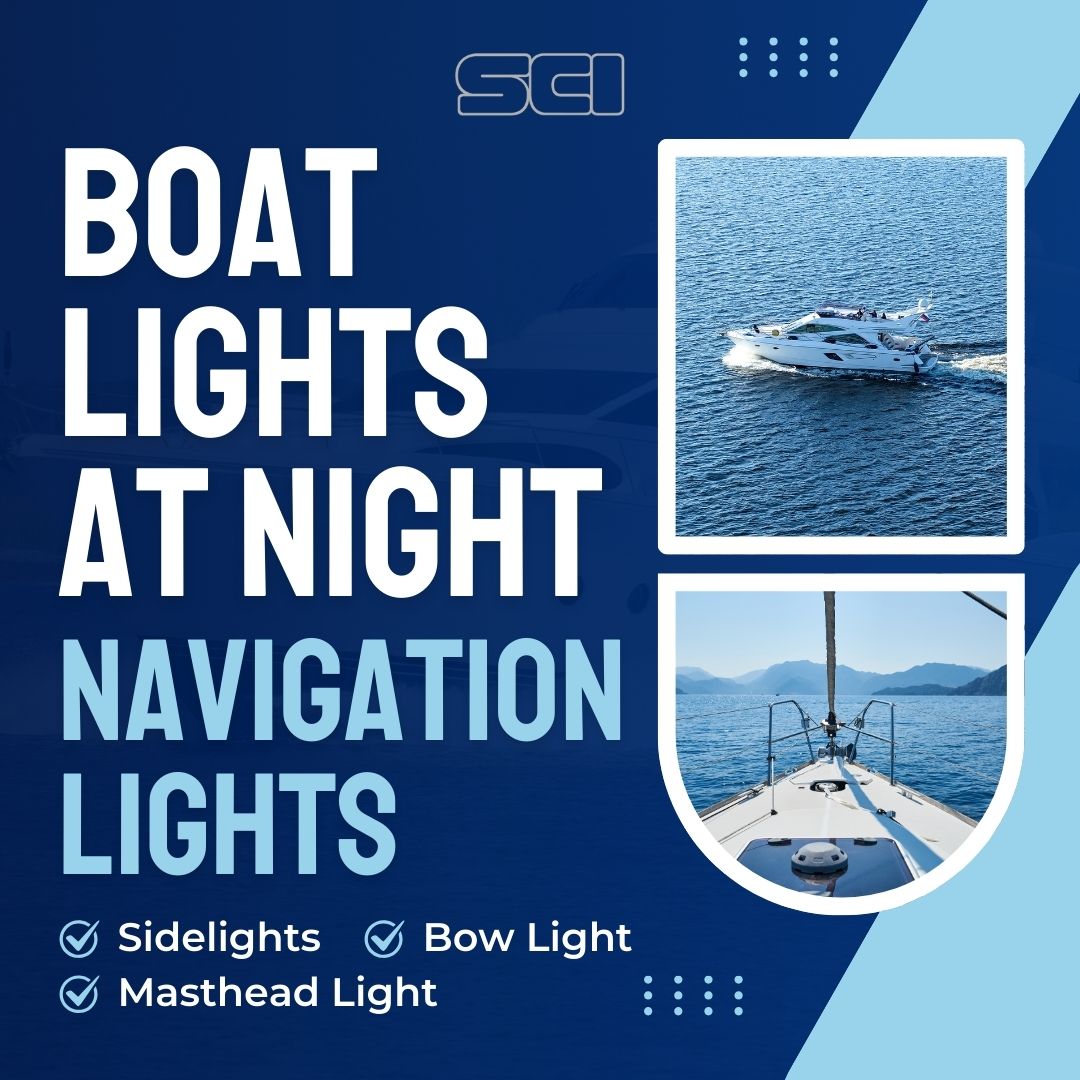
Navigation lights are the most critical safety feature for any vessel. They tell other skippers your size, direction, and status.
| Light Type | Color | Position | Function |
| Sidelights | Red (Port) & Green (Starboard) | Bow / Front Sides | Indicates the vessel’s direction and determines right-of-way. |
| Bow Light | White | Bow / Front Sides | Visible from the front (135° arc) to warn approaching vessels ahead. |
| Masthead Light | White | High Point / Mast | Visible from the front and sides; indicates a power-driven vessel |
💡Pro Tip: Avoid “Fading Lens” Problem
Not all navigation lights are created equal. A common issue with generic lights is that the red light output tends to degrade over long-term use.
However, once the light color begins to degrade, it effectively no longer meets regulatory requirements and causes your boat to fail safety inspections. SCI navigation lights can maintain strict color accuracy (chromaticity) for years, ensuring you always communicate the right signal.
Further Reading: What is CCT in Lighting and How to Choose the Right One?
Type 4: All-Round White Light (Anchor Light)
An all-round anchor white light shines 360 degrees and is vital when your boat is stationary.
By law, this light must be visible for at least 2 nautical miles. You must display this light when anchored at night (outside designated anchorage areas). It ensures other vessels don’t crash into your stationary boat in the dark.
Type 5: Utility & Underwater Lights
While not strictly “navigation lights” for legal signaling, these are essential for operational safety and crew comfort.
| Light Type | Color | Position | Function |
| Floodlights | White, Blue, or Red | Deck area / Above working zones | For illuminating the wheelhouse, foredeck, and work areas. |
| Underwater Lights | White, Blue, or Red | Below the waterline | To improve underwater visibility and lighting performance. |
💡Pro Tip: Preventing Corrosion
Auxiliary lights often face long-term saltwater corrosion. Aluminum housings frequently oxidize, leading to electrical failure. SCI’s approach involves using specialized polymer housings with IP68 waterproof ratings, preventing water intrusion and electrolysis damage.
Further Reading: IP67 vs IP68: Waterproof Rating Comparison and Selection
Why Marine Professionals Choose SCI
When it comes to boat lights at night, failing equipment leads to fines, accidents, and unnecessary maintenance costs. SCI is a trusted leader in marine lighting because we focus on delivering high-quality, reliable solutions that enhance nighttime navigation safety and reduce long-term upkeep for vessel operators.
SCI goes beyond basic lighting requirements by meeting international safety standards—including CE (EN60945) and USCG-ABYC C5 certification for our navigation lights.
This ensures our products are not only legally compliant but also rigorously tested against salt spray, vibration, and electromagnetic interference. As a result, every light provides steady and dependable illumination in harsh marine environments.
Upgrade to SCI today—because on the water, you can’t simply pull over to fix a light.
Further Reading: COB LED VS SMD LED Portable Work Lights: 8 Main Differences
FAQs
Q1. How can I identify other boats by their lights?
Red means the port (left) side, green means starboard (right), and white is either the stern or masthead. These colors help you understand a boat’s direction at night.
Q2. What are the most common mistakes with boat lights?
Using incorrect colors, placing lights incorrectly, using dim lights, or failing to follow legal standards can all pose safety risks.
Q3. Why do my boat lights flicker or fail at night?
Flickering is often caused by voltage drops in the boat’s electrical system or corrosion in the wiring.
Using high-quality fixtures like SCI, which are designed specifically for marine environments and offer strong corrosion resistance, ensures steady light output even in harsh conditions.
Further Reading: A Guide to Understanding the Beam Angle of LED Lights
Q4. When should boat lights be turned on?
Legally, boat lights must be displayed from sunset to sunrise. They are also required during periods of “restricted visibility,” such as fog, mist, or heavy rain, regardless of the time of day.
Q5. Which lights are required at night?
Powerboats and yachts need masthead, stern, and side navigation lights. Floodlights and underwater lights are optional but helpful for extra visibility.
Further Reading:
The 11 Kinds of Car Lights You Should Know: Functions & Tips in One Guide
Port and Starboard Lights: A Basic Guide to Navigation Lighting
Yacht and Boat Navigation Lights Rules: Types & Requirements
3 Uses of Forklift Truck Blue Lights That Make Workplaces Safer
Automotive Fog Lights: When to Use and Why They Matter?